
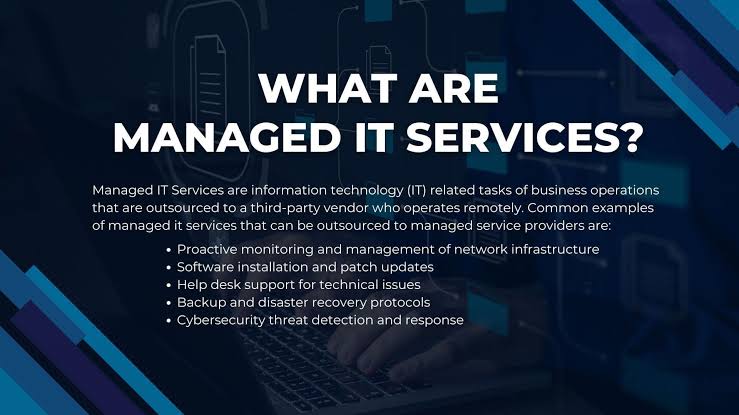
This is where Managed IT Services become invaluable. By partnering with a Managed Service Provider (MSP), organizations delegate routine tech management, strengthen cyber defenses, and deploy scalable cloud architecture—all while predicting monthly operating costs.
1. What Are Managed IT Services?
Managed IT Services refer to the practice of outsourcing day-to-day Information Technology operations to a specialized third-party provider (an MSP). Unlike traditional “break-fix” IT models, where engineers only respond after a system breaks, an MSP operates on a proactive management framework.
Comparison: Reactive vs. Proactive IT
| Attribute | Traditional “Break-Fix” IT | Managed IT Services (MSP) |
|---|---|---|
| Operational Approach | Reactive (Fixes issues after failure) | Proactive (Prevents downtime before it happens) |
| Cost Structure | Unpredictable, high per-incident fees | Predictable flat-rate monthly subscription |
| Downtime Impact | High downtime leads to revenue loss | Minimized through continuous 24/7 monitoring |
| Strategic Focus | Emergency fixes only | Business alignment, growth, and security |
2. The Core Pillars of Managed IT Services
To construct a resilient technical architecture, a comprehensive Managed IT plan focuses on three primary operational pillars: IT Support, Cybersecurity, and Cloud Solutions.
Pillar 1: Comprehensive IT Support
A reliable IT support system ensures your employees stay productive without technical interruptions.
- 24/7 Help Desk Support: Immediate remote and on-site troubleshooting for user device issues, software errors, and network connectivity problems.
- Network & Infrastructure Management: Continuous monitoring of switches, routers, and bandwidth usage to maintain optimal operational speed.
- Routine Patching & Updates: System updates applied in the background to ensure security and operational stability across all operating systems.
Pillar 2: Enterprise-Grade Cybersecurity
With cyber threats evolving rapidly, businesses require multi-layered defense mechanisms.
- Endpoint Detection & Response (EDR): AI-driven antivirus and endpoint protection to neutralize malware, ransomware, and unauthorized access attempts.
- Firewall & Network Defense: Securing perimeter networks to filter inbound and outbound malicious traffic.
- Data Backup & Disaster Recovery (BDRA): Automated offsite backup routines paired with rapid recovery protocols to prevent catastrophic data loss during ransomware attacks or system failure.
- Compliance & Audits: Aligning network configurations with industry protocols like GDPR, HIPAA, or ISO standards.
Pillar 3: Scalable Cloud Solutions
Modern enterprises require agile cloud computing to enable remote work and fast application deployment.
- Cloud Migration & Strategy: Seamlessly moving legacy on-premise servers to cloud environments like AWS, Microsoft Azure, or private cloud setups.
- SaaS Administration: Managing enterprise subscriptions such as Microsoft 365, Google Workspace, and CRM software.
- Hybrid Cloud Optimization: Integrating legacy infrastructure with public cloud environments for secure, scalable workflows.
3. Why Businesses Choose Managed IT Services
Switching from internal IT troubleshooting to a managed provider delivers measurable operational advantages:
- Reduced Capital Expenses (CapEx): Eliminates heavy upfront investments in hardware servers and dedicated internal staffing.
- Access to Top-Tier Expertise: Immediate access to specialized cloud engineers, cybersecurity analysts, and network architects.
- Enhanced Security & Compliance: Protects sensitive customer records and maintains compliance with global privacy regulations.
- Predictable Scalability: Easily scale user licenses and cloud resources up or down as business headcount changes.
Transform Your Digital Infrastructure with Knotra Global
Navigating complex IT management, mounting cybersecurity risks, and cloud transitions shouldn’t slow down your core business goals.
At Knotra Global, we deliver end-to-end Managed IT Services customized to power your business growth. From 24/7 proactive network monitoring and enterprise-grade cybersecurity defenses to smooth cloud migration strategies, our dedicated engineering team ensures your business stays secure, compliant, and uninterrupted.
- Tailored IT Infrastructure Strategy
- Proactive Cyber Threat Mitigation
- Seamless Cloud Scaling & Management
Ready to optimize your IT infrastructure and secure your digital assets?
👉 Discover our complete technology solutions at Knotra Global today.

Ravi, IT & Marketing Director at KnoTra Global, blends 16+ years of IT and marketing expertise to drive innovation in cybersecurity, cloud, and IT support.