
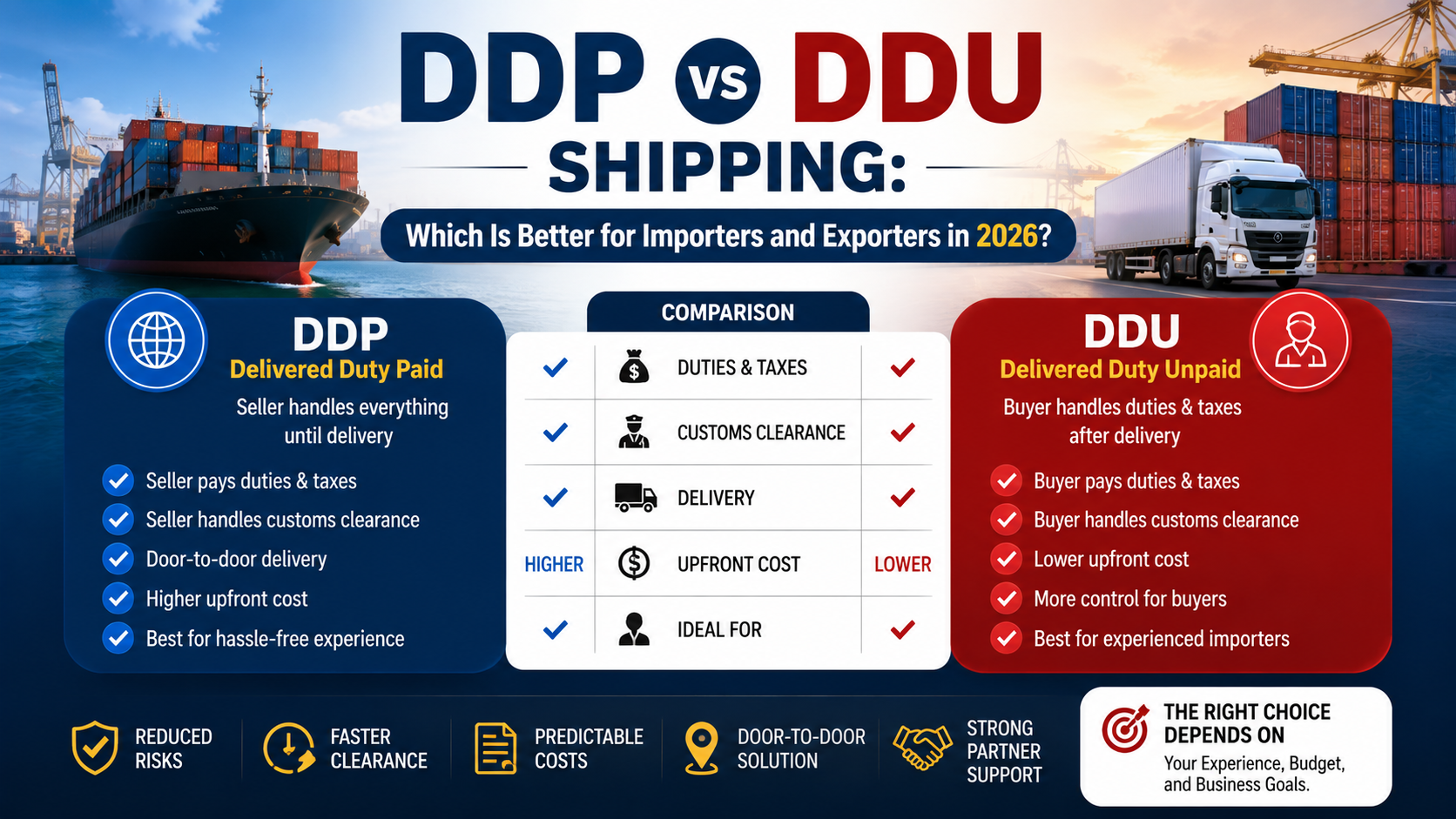
Choosing the right shipping terms can save thousands in logistics costs, prevent customs delays, and create a smoother experience for both buyers and sellers. Yet many businesses still confuse DDP (Delivered Duty Paid) and DDU (Delivered Duty Unpaid), especially when expanding into international markets.
Although both terms involve delivering goods to the customer’s destination, the responsibility for customs duties, taxes, and clearance differs significantly. Understanding these differences helps importers avoid unexpected charges while allowing exporters to offer shipping terms that match their customers’ expectations.
This guide explains DDP vs DDU shipping in simple language, compares costs and responsibilities, highlights common mistakes, and helps you choose the best option for your business in 2026.
What Is DDP Shipping?
Delivered Duty Paid (DDP) is an international shipping arrangement where the seller takes responsibility for almost every stage of the shipment until it reaches the buyer’s destination.
Under DDP, the seller typically manages:
- Export documentation
- International transportation
- Customs clearance
- Import duties
- Taxes
- Final delivery
For buyers, DDP provides a predictable purchasing experience because most logistics costs are already included before delivery. Many businesses prefer DDP when shipping to customers who expect a hassle-free buying process.
What Is DDU Shipping?
Delivered Duty Unpaid (DDU) was widely used before newer Incoterms introduced similar delivery structures. In practice, businesses still use the term informally to describe shipments where the seller delivers the goods, but the buyer pays import duties and taxes before receiving them.
Under a DDU-style arrangement, buyers usually become responsible for:
- Import duties
- Local taxes
- Customs payments
- Clearance-related charges
This often results in lower upfront shipping costs but requires buyers to manage customs obligations after arrival.
DDP vs DDU: Quick Comparison
|
Feature |
DDP |
DDU |
|---|---|---|
|
Import Duties |
Seller Pays |
Buyer Pays |
|
Customs Clearance |
Seller Handles |
Buyer Handles |
|
Upfront Cost |
Higher |
Lower |
|
Delivery Experience |
Seamless |
Additional Buyer Action |
|
Best For |
E-commerce & B2B |
Experienced Importers |
The biggest difference is simple: DDP reduces surprises for buyers, while DDU shifts import costs to the receiver.
When Should You Choose DDP?
DDP works particularly well when customer experience matters more than offering the lowest quoted shipping price.
DDP is ideal for:
- E-commerce businesses
- First-time importers
- Premium products
- Door-to-door deliveries
- International marketplaces
Customers appreciate knowing the total cost before placing an order.
Businesses using integrated freight forwarding and customs services often find DDP easier to manage because documentation, transportation, and clearance stay coordinated under one logistics partner.
When Is DDU a Better Option?
Some businesses intentionally prefer buyers to manage local customs.
DDU-style arrangements often work better for:
- Large commercial imports
- Experienced importers
- Businesses with customs brokers
- Companies managing local compliance internally
These buyers may already have established customs processes, making local clearance more efficient.
Cost Comparison: Which Saves More Money?
Many businesses assume DDU is always cheaper.
That’s not necessarily true.
DDP Costs Include
- Freight charges
- Customs clearance
- Duties
- Taxes
- Final delivery
DDU Costs May Include
- Freight charges
- Destination handling
- Customs duties
- Local taxes
- Clearance fees
- Storage charges if delayed
A lower shipping quote can become more expensive when unexpected customs costs appear later.
How Customs Clearance Changes Between DDP and DDU
Customs clearance is often where delays occur.
With DDP:
- documentation is prepared earlier,
- duties are planned in advance,
- customs coordination is usually smoother.
With DDU:
- buyers may receive customs notifications,
- payment delays can hold shipments,
- additional documentation requests may slow delivery.
Modern customs systems increasingly rely on digital documentation, making preparation even more important for international shipments.
Common Mistakes Businesses Make
Avoid these expensive mistakes.
Choosing Based Only on Freight Price
The cheapest shipping quote rarely represents the total landed cost.
Ignoring Destination Taxes
Import taxes vary by country and product category.
Incorrect Product Classification
HS Code mistakes can delay customs or increase duties.
Poor Documentation
Incomplete invoices, packing lists, and declarations often trigger inspections.
Freight forwarders help reduce these risks by coordinating documentation across multiple transport stages.
How Freight Forwarders Simplify DDP Shipments
Managing international shipments involves much more than booking transport.
A professional freight forwarding partner helps with:
- Route planning
- Carrier selection
- Documentation
- Customs coordination
- Shipment tracking
- Delivery scheduling
Instead of working with multiple vendors separately, businesses gain a more organized shipping process.
Real-time shipment visibility has become increasingly valuable because businesses expect updates throughout transportation rather than only at delivery.
Industries That Benefit Most from DDP
Some industries benefit more than others from predictable delivery costs.
Electronics
High-value products require smooth customs handling.
Machinery
Clear documentation reduces expensive port delays.
Medical Equipment
Reliable delivery timelines matter for healthcare businesses.
Fashion
International online shoppers expect transparent pricing.
Consumer Goods
Door-to-door delivery improves customer satisfaction.
Each industry benefits differently, but reducing customs uncertainty remains a common advantage.
How Digital Logistics Improves International Shipping
Technology continues changing global logistics.
Modern freight solutions increasingly offer:
- digital document management,
- shipment tracking,
- automated notifications,
- centralized booking,
- customs visibility.
These improvements help businesses reduce paperwork while improving communication across the supply chain.
Why End-to-End Logistics Matters
International shipping rarely depends on transportation alone.
A successful shipment requires coordination between:
- pickup,
- warehousing,
- customs,
- freight movement,
- destination handling,
- final delivery.
Managing these stages together reduces communication gaps that often create delays.
Businesses working with experienced logistics providers often gain better visibility across the entire shipment journey rather than managing each stage separately.
Which Option Should You Choose in 2026?
Choose DDP if you want:
- predictable customer pricing,
- smoother international deliveries,
- stronger e-commerce experiences,
- simplified customs management.
Choose DDU if your buyer:
- already manages customs,
- understands local import rules,
- prefers controlling destination charges.
The right choice depends less on shipping cost alone and more on who is best equipped to manage customs responsibilities.
Final Thoughts
DDP and DDU both serve important roles in international trade, but they create very different experiences for buyers and sellers.
As global trade becomes more digital and customs compliance continues evolving, businesses benefit from planning shipping responsibilities before cargo leaves the warehouse. A clear understanding of duties, documentation, and delivery obligations helps reduce delays, improve customer satisfaction, and create more predictable international shipments.
Need help choosing between DDP and DDU? Contact Knotra Global for expert logistics solutions.
Frequently Asked Questions
What is the biggest difference between DDP and DDU?
DDP requires the seller to pay import duties and manage customs, while DDU leaves those responsibilities to the buyer.
Is DDP better for e-commerce?
Yes. DDP creates a smoother customer experience because buyers know the total cost before delivery.
Does DDU reduce shipping costs?
It can reduce upfront quoted costs, but buyers may pay additional duties, taxes, and clearance charges later.
Can a freight forwarder handle DDP shipments?
Yes. Freight forwarders often coordinate transportation, documentation, customs clearance, and delivery under DDP arrangements.
Which shipping option is better for first-time importers?
DDP is generally easier because customs responsibilities remain with the seller, reducing unexpected charges.

Ravi, IT & Marketing Director at KnoTra Global, blends 16+ years of IT and marketing expertise to drive innovation in cybersecurity, cloud, and IT support.